


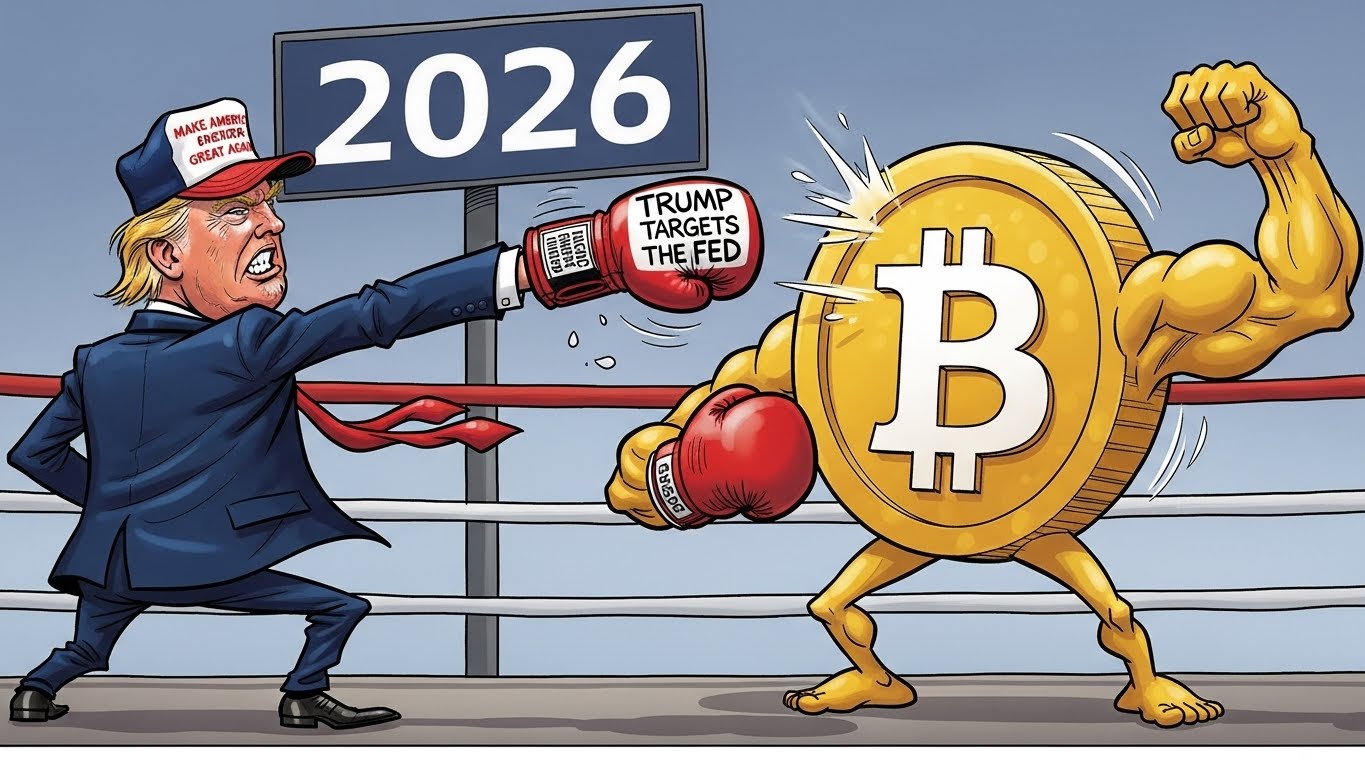
The unprecedented nature of how Trump targets the Fed Bitcoin market participants must navigate represents uncharted territory for both traditional finance and cryptocurrency. Never before has a sitting president so openly threatened the independence of America’s central bank while simultaneously championing Bitcoin through executive orders establishing strategic reserves and crypto-friendly regulations. This dual dynamic creates fascinating tension where Bitcoin could benefit from both looser monetary policy and the flight-to-safety narrative that emerges when institutional trust erodes. Understanding this complex interplay between political pressure, monetary policy, and cryptocurrency valuation has become essential for anyone invested in or considering digital assets.
How Trump Targets the Fed Bitcoin Investors Monitor
The immediate Bitcoin market reaction to these developments has been mixed but telling. When news broke of the criminal investigation into Powell, Bitcoin and the broader crypto sector experienced a sharp upswing. This response suggests that at least some market participants view Federal Reserve independence threats as bullish for Bitcoin, which positions itself as an alternative to politically manipulated fiat currency. The cryptocurrency’s initial rally reflects the thesis that government monetary mismanagement ultimately drives adoption of censorship-resistant, algorithmically-constrained alternatives.
However, the longer-term implications of Trump’s Fed pressure on Bitcoin remain deeply uncertain. While some analysts celebrate any scenario that might lead to aggressive interest rate cuts and monetary expansion, others worry that the institutional chaos and uncertainty created by undermining the Federal Reserve could trigger broader market panic that drags down all risk assets including cryptocurrency. The tension between these competing narratives will likely define Bitcoin’s trajectory through much of 2026 as the political drama unfolds.
The technical aspects of monetary policy and Bitcoin relationship add additional complexity. Lower interest rates typically benefit non-yielding assets like Bitcoin by reducing opportunity costs of holding them versus interest-bearing alternatives. If Trump successfully pressures his future Fed appointee into dramatic rate cuts, as he promised with a chairman who believes in lowering rates “by a lot,” the resulting monetary expansion could theoretically drive capital toward Bitcoin as an inflation hedge. Yet this simplistic analysis ignores how institutional investors might react to perceived political capture of monetary policy.
The Bitcoin Strategic Reserve: Trump’s Crypto Contradiction

The crypto strategic reserve concept creates interesting dynamics for Bitcoin valuation. Currently capitalized only with seized Bitcoin from criminal forfeitures, ARK Invest’s Cathie Wood predicts the government will eventually move beyond confiscated Bitcoin and begin actively purchasing, potentially acquiring the originally intended one million BTC. Such government buying would remove enormous supply from markets while sending powerful signals about Bitcoin’s status as a reserve asset comparable to gold.
The political motivations behind Trump’s Bitcoin reserve policy intertwine with his Fed targeting in revealing ways. Wood suggests crypto has become a durable political issue that could shape Trump’s approach to the 2026 midterm elections, meaning the president views cryptocurrency advocacy as politically advantageous. This creates scenarios where Trump might accelerate strategic reserve purchases or push crypto-friendly policies specifically to energize his political base, with Bitcoin potentially benefiting from purely political rather than economic calculations.
Critics have questioned the wisdom and motivations behind a federal Bitcoin reserve. Concerns emerged about what would happen if Bitcoin increases massively in price and the government then sells the reserve to pay debt, potentially triggering significant price decreases. The government would become a major market player with outsized influence over an asset that’s supposed to be decentralized and resistant to single-entity control. This tension between Bitcoin’s philosophical foundations and government involvement creates paradoxes that remain unresolved.
The legislative landscape surrounding Trump’s crypto policies continues evolving. Senator Cynthia Lummis introduced a bill in March 2025 directing purchase of one million bitcoins over five years by diversifying existing federal funds. Such proposals, if enacted, would transform Bitcoin from alternative asset to officially recognized government reserve, fundamentally changing its role in the financial system. Whether this transformation ultimately benefits or harms Bitcoin’s value proposition remains hotly debated among cryptocurrency advocates.
Federal Reserve Independence and Crypto’s Value Proposition
The existential threat to Federal Reserve independence Bitcoin advocates have long warned about appears to be materializing before our eyes. The traditional argument for Bitcoin has always centered on its algorithmic monetary policy immune to political manipulation, contrasting sharply with fiat currencies subject to government interference. As Trump openly pressures the Fed and threatens criminal prosecution of its chair for independent decision-making, this theoretical advantage of Bitcoin becomes concrete reality that investors must now evaluate.
The broader implications for cryptocurrency adoption from this Fed independence crisis extend far beyond immediate price movements. If the American president can successfully intimidate or replace Federal Reserve leadership to achieve politically desired monetary policy, it validates core Bitcoin narratives about fiat currency vulnerability to political capture. This scenario might accelerate institutional and retail adoption as investors seek alternatives to currencies whose value increasingly depends on political rather than economic factors.
However, concerns exist that undermining Fed independence with Trump getting greater say over monetary policy could spook markets, creating the kind of instability that hurts all assets including Bitcoin. Cryptocurrency remains heavily correlated with equity markets and risk appetite. If Trump’s Fed pressure triggers institutional panic or economic crisis, Bitcoin might initially suffer alongside stocks rather than serving as effective safe haven. The transition from risk asset to safe haven status remains incomplete and uncertain.
The political risk in crypto markets has intensified as Trump’s approach demonstrates how quickly regulatory and policy environments can shift. While current administration policies favor cryptocurrency through strategic reserves, reduced regulation, and pro-crypto appointments, future administrations could reverse these stances dramatically. Investors must now factor political risk into cryptocurrency valuations in ways that challenge the narrative of Bitcoin as apolitical money immune to government action.
How Bitcoin Price Responds to Fed Policy Pressure
The immediate Bitcoin price reaction to Trump’s Fed targeting has shown the complexity of cryptocurrency’s relationship with traditional monetary policy. Bitcoin held steady near $88,000 after briefly surging toward $90,000 when Trump announced plans to appoint a Fed chair supporting steep rate cuts. This initial enthusiasm reflected expectations that dramatically lower rates would drive liquidity into risk assets including cryptocurrency, creating favorable conditions for price appreciation.
Yet the sustainability of Bitcoin gains from Fed pressure remains questionable. Markets are “allergic to uncertainty,” according to Coin Bureau analyst Nic Puckrin, who warned that risk assets care more about the Fed than anything else. The uncertainty created by unprecedented political interference in monetary policy could overwhelm any benefits from looser policy itself. Investors might demand risk premiums for holding any assets when the basic framework of monetary governance becomes unpredictable.
The timing dynamics of monetary policy and Bitcoin create additional complexity. Jerome Powell remains at the helm for the first three interest rate decisions of 2026, meaning immediate policy changes from Trump’s Fed pressure won’t materialize until later in the year when his appointed successor takes over. This lag between political pressure and actual policy shifts creates periods where uncertainty dominates without corresponding monetary accommodation that might support Bitcoin prices.
Technical factors also influence how Bitcoin responds to Fed developments. JPMorgan eliminated its forecast for any 2026 rate cuts, instead predicting a rate increase in 2027, dramatically shifting expectations that had previously supported cryptocurrency valuations. Other major financial institutions similarly pushed back rate cut timelines, suggesting that regardless of political pressure, economic conditions might not justify the aggressive monetary loosening that Bitcoin bulls hope for.
The Dollar Debasement Thesis and Bitcoin’s Response
The mechanics of dollar debasement driving Bitcoin have precedent in cryptocurrency history. Bitcoin has historically benefited during periods when faith in fiat currency erodes, whether through inflation, currency crises, or monetary policy mistakes. The dollar has plunged nearly ten percent over the past year, initially triggered by Trump’s trade war and subsequently hammered by geopolitical turbulence and expectations of continued Fed rate cuts. This dollar weakness provides fundamental support for Bitcoin’s value proposition as a harder form of money with fixed supply constraints.
The political dimension of Trump’s monetary pressure adds unique aspects to the debasement thesis. Analysts predict Trump will “hand out the candy” before November midterm elections, with the debasement trade “set to go into overdrive” in 2026. This suggests calculated political manipulation of monetary policy timed around electoral considerations, potentially creating predictable windows where Bitcoin might benefit from anticipated monetary expansion designed to stimulate economy before voters head to polls.
Critics of the debasement thesis point out that Bitcoin’s correlation with traditional risk assets complicates simple inflation hedge narratives. During recent periods of high inflation, Bitcoin fell alongside stocks rather than providing protection, suggesting its role as inflation hedge remains unproven. If Trump’s Fed pressure creates economic instability or recession rather than controlled debasement, Bitcoin might struggle regardless of currency dynamics.
The institutional perspective on Bitcoin as debasement hedge continues evolving. Major financial institutions increasingly acknowledge Bitcoin’s potential role in portfolios as alternative to fiat currency, yet remain cautious about treating it as proven inflation protection. How institutions respond to Trump’s Fed pressure and any resulting dollar weakness will likely prove more important for Bitcoin’s price than retail investor sentiment or cryptocurrency community narratives.
Regulatory Environment: Trump’s Crypto-Friendly Approach
While Trump targets the Fed Bitcoin benefits significantly from the administration’s aggressively pro-cryptocurrency regulatory posture. Trump has signed executive orders establishing bitcoin reserve and crypto stockpile, backed legislative efforts like the GENIUS Act for stablecoin rules, and hosted Digital Asset Summits with major crypto companies. This comprehensive regulatory support creates favorable environment for cryptocurrency development even as Trump’s Fed interference creates monetary uncertainty.
The transformation in crypto regulation under Trump represents dramatic reversal from previous approaches. Federal banking regulators announced that banks no longer need advance permission to engage in cryptocurrency, removing significant barriers that previously constrained institutional participation. Combined with Bitcoin and Ethereum ETF approvals under streamlined standards, the regulatory infrastructure for mainstream crypto adoption has improved dramatically under Trump’s administration.
The political calculation behind crypto support reflects recognition that cryptocurrency represents organized political constituency. Industry-backed political action committees poured money into congressional races, while prominent executives publicly endorsed Trump and donated personally. This political organization of crypto interests means Trump views cryptocurrency advocacy as politically beneficial, creating alignment between his electoral interests and industry growth that should persist through 2026 midterms.
However, the tension between regulatory support and Fed independence creates contradictions. Trump simultaneously champions Bitcoin as alternative to government-controlled money while pressuring the government institution responsible for managing that money. This philosophical inconsistency suggests Trump’s crypto support might be more opportunistic than ideological, raising questions about how durable these favorable policies remain if political calculations change.
The international dimension of crypto regulation also matters. As Trump pushes to make America the “crypto capital of the world” while simultaneously undermining confidence in American institutions through Fed pressure, competing jurisdictions might position themselves as more stable environments for cryptocurrency innovation. The same institutional chaos that validates Bitcoin’s value proposition might undermine America’s ability to lead global cryptocurrency development.
Market Uncertainty: Short-Term Volatility vs Long-Term Thesis
The year-end dynamics affecting Bitcoin add complexity to evaluating Trump’s Fed pressure impact. Year-end portfolio repositioning and fading hopes for a Santa Claus rally contributed to Bitcoin’s range-bound behavior, making it difficult to isolate political factors from seasonal and technical influences. Investors must distinguish between temporary market mechanics and fundamental shifts driven by changing monetary and political landscape.
The liquidity question remains central to Bitcoin’s near-term prospects. Vincent Liu of Kronos Research noted that after a strong run, flows have cooled, leverage has reset, and the market awaits a real catalyst. Whether Trump’s Fed pressure and potential policy changes provide that catalyst or simply add noise without driving meaningful capital inflows will determine whether Bitcoin benefits from current political turmoil.
Technical analysis suggests Bitcoin consolidation patterns might precede major moves regardless of political developments. Analysis shows Bitcoin exhibiting behavior similar to March through May 2025 consolidation that preceded a surge to lifetime highs above $126,000. This suggests that once uncertainty resolves, whether through Fed chair appointment, policy clarity, or simply time passing, Bitcoin could experience significant directional move that current range-bound trading obscures.
The psychological aspect of crypto investor sentiment during Trump’s Fed pressure creates additional dynamics. Veteran cryptocurrency participants have experienced numerous periods of political uncertainty, regulatory threats, and macroeconomic chaos. Many view such episodes as temporary noise that ultimately strengthens Bitcoin’s long-term position by demonstrating need for politically-independent money. This conviction might support prices even during difficult periods, though newer institutional investors might lack this context and react more negatively to uncertainty.
Institutional Response to Political-Monetary Conflict
The institutional infrastructure for Bitcoin investment has dramatically improved under Trump’s administration, creating conditions where institutions can more easily allocate to cryptocurrency regardless of short-term volatility. Favorable regulatory treatment and explicit government endorsement through Strategic Bitcoin Reserve removed key psychological and structural barriers to institutional capital allocation. These changes mean institutions now operate within frameworks acknowledging cryptocurrency validity rather than treating digital assets as speculative outliers requiring exceptional justification.
However, institutional risk management concerns about Trump’s Fed pressure could override favorable regulatory environment. Large institutional investors have strict mandates around political risk, governance standards, and macroeconomic stability. If they perceive Trump’s Fed interference as threatening fundamental institutional stability, they might reduce crypto allocations regardless of immediate price action. The tension between improved regulatory access and increased political risk creates difficult calculations for institutional allocators.
The pension fund and endowment consideration of Bitcoin creates particularly interesting dynamics. These large, conservative institutional investors have only begun exploring cryptocurrency allocations. How they interpret Trump’s Fed pressure will significantly influence capital flows into Bitcoin over coming years. If they view it as validating Bitcoin’s independence value proposition, allocations might accelerate. If they see it as destabilizing chaos that increases all risk, they might delay crypto investments indefinitely.
The question of Bitcoin as institutional reserve asset gains urgency as government embraces strategic reserves while undermining monetary institutions. Some analysts argue the real target of Trump’s crypto strategy is the Federal Reserve itself, suggesting coordinated effort to elevate Bitcoin while diminishing traditional monetary authority. Institutions must now evaluate whether they’re witnessing calculated transition toward new monetary system or chaotic political interference that threatens existing order.
Global Implications: How Other Nations React
The competitive dynamics among nations regarding Bitcoin strategy have intensified. Several US states have initiated Bitcoin reserve projects, with Texas signing legislation creating a state strategic Bitcoin reserve. This subnational adoption demonstrates that even within America, regional governments see strategic value in Bitcoin positioning, potentially creating competitive dynamics where jurisdictions compete to attract crypto industry and holders through favorable policies.
International reactions to American crypto policy vary dramatically. Some nations might view Trump’s Bitcoin embrace and Fed pressure as opportunity to position themselves as more stable alternatives for both traditional finance and cryptocurrency innovation. Others might see America’s validation of Bitcoin through strategic reserves as signal to develop similar policies. The divergence in responses will shape global cryptocurrency adoption patterns throughout 2026 and beyond.
The reserve currency implications of Trump’s approach create fascinating speculation. If America embraces Bitcoin while simultaneously undermining confidence in Federal Reserve independence, it potentially accelerates de-dollarization trends where other nations seek alternatives to dollar-dominated international finance. Ironically, Bitcoin could benefit from American institutional chaos even as America’s global financial dominance suffers.
The geopolitical competition dimension of Bitcoin adoption adds urgency to Trump’s policies. China’s restrictions on cryptocurrency contrast with America’s embrace, creating ideological divide where cryptocurrency adoption becomes proxy for broader questions about freedom, government control, and economic systems. How this competition evolves will influence whether Bitcoin achieves mainstream global adoption or remains niche asset split along geopolitical lines.
Investment Strategies During Fed-Political Conflict
Navigating the environment where Trump targets the Fed Bitcoin investors respond requires sophisticated strategies balancing opportunity and risk. The unprecedented nature of current political-monetary conflict means historical playbooks provide limited guidance. Investors must develop frameworks for operating in conditions where both monetary policy and political stability of institutions cannot be assumed.
The position sizing question becomes critical during such uncertainty. Even investors bullish on Bitcoin’s long-term prospects from Trump’s Fed pressure should recognize that near-term volatility could be extreme. Conservative position sizing that allows weathering significant drawdowns without forced selling becomes essential. The temptation to over-allocate based on compelling narratives about debasement and institutional chaos must be balanced against risk that uncertainty suppresses all assets.
Diversification strategies take on new importance when both traditional monetary institutions and cryptocurrency face unique risks. Rather than viewing Bitcoin purely as hedge against fiat currency problems, investors might maintain exposure to both traditional assets and cryptocurrency, recognizing that different scenarios favor different holdings. If Trump’s Fed pressure leads to controlled monetary expansion, Bitcoin might excel. If it triggers crisis, traditional safe havens might outperform.
The timing considerations for Bitcoin investment during Trump’s Fed pressure involve difficult trade-offs. Major financial institutions like JPMorgan have dramatically shifted rate cut forecasts, with CME FedWatch showing 95% probability of January meeting rate hold. This suggests that regardless of political pressure, immediate monetary loosening might not materialize, potentially creating periods where Bitcoin lacks catalysts even as longer-term thesis strengthens.
Dollar-cost averaging versus lump-sum investment takes on particular relevance during political-monetary uncertainty. The volatility created by Trump’s Fed targeting likely creates opportunities to accumulate Bitcoin at varying prices rather than attempting to time perfect entry. Systematic investment approaches remove emotion from decision-making during chaotic periods when news flow might otherwise drive impulsive choices.
The 2026 Outlook: What Happens Next
The midterm election dynamics create specific timeline around which political-crypto-monetary interactions might intensify. Cathie Wood predicts Trump won’t want to be a lame duck and may pursue several crypto initiatives including implementing de minimis tax exemption for small transactions and potentially purchasing Bitcoin for strategic reserve. These policy pushes timed around elections could create predictable windows where Bitcoin benefits from political calculations.
The Federal Reserve chair appointment represents perhaps the single most important near-term variable. Trump promises to announce a Fed chair who believes in lowering rates “by a lot” early in 2026. Who he selects and how markets respond to that choice will significantly influence both traditional finance and cryptocurrency. A chair viewed as Trump puppet could trigger institutional crisis that hurts all assets. A respected figure who happens to favor lower rates might provide best case scenario for Bitcoin.
The question of strategic reserve implementation remains unresolved but critical. If Trump administration moves from merely holding seized Bitcoin to actively purchasing, as Wood predicts, it would represent enormous demand that fundamentally changes supply-demand dynamics. The timing, pace, and transparency of any such purchases will heavily influence how markets respond.
The economic data reality provides constraint on political narratives regardless of Trump’s pressure. If inflation reaccelerates or employment weakens significantly, Fed policy must respond to economic conditions rather than political preferences. The interplay between Trump’s desired monetary policy and economic reality will determine whether his Fed pressure produces his desired outcomes or creates conflict that benefits Bitcoin through different mechanisms than anticipated.
Conclusion: Positioning for Bitcoin’s Political-Monetary Future
Investors navigating this complex environment must balance competing considerations. The fundamental case for Bitcoin as censorship-resistant, algorithmically-constrained money strengthens when political interference in monetary policy becomes explicit reality rather than theoretical concern. Yet the near-term volatility and uncertainty created by institutional conflict could suppress prices regardless of strengthening long-term thesis. Success requires maintaining conviction in Bitcoin’s value proposition while managing risk appropriately for uncertain conditions.
The months ahead will test whether BitcJoin’s independence from government control represents genuine advantage or simply different set of risks and limitations. If Trump successfully pressures the Fed into politically-motivated policy that undermines dollar confidence, Bitcoin could benefit enormously as alternative store of value. If his pressure triggers broader institutional crisis that sends capital fleeing all risk assets, Bitcoin might suffer alongside equities despite strengthening narrative. The outcome depends on variables ranging from economic data to political skill to institutional resilience.
Take action by developing strategies appropriate for this unique environment. Rather than making all-or-nothing bets on specific outcomes from Trump’s Fed targeting, consider measured approaches that maintain Bitcoin exposure while managing downside risk. Monitor key developments including Fed chair appointment, strategic reserve implementation, monetary policy decisions, and economic data that might override political considerations. Stay informed about how Trump targets the Fed Bitcoin responds so you can adjust positioning as this historic conflict unfolds. The cryptocurrency’s response to political-monetary conflict will reveal much about its viability as foundation for future financial system independent of government control.
