


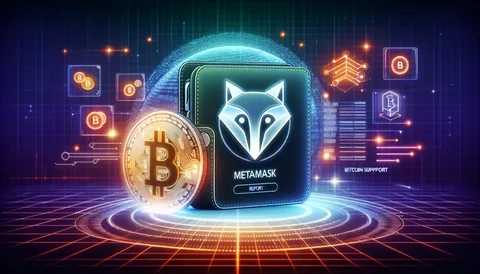
MetaMask adds Bitcoin support in a move that signals a major shift in how users interact with digital assets across blockchains. For years, MetaMask has been synonymous with Ethereum and the broader EVM ecosystem, serving as the primary gateway for decentralized finance, NFTs, and Web3 applications. Bitcoin, despite being the largest and most recognized cryptocurrency, existed largely outside MetaMask’s native experience. That separation is now changing, and its implications are far-reaching.
When MetaMask adds Bitcoin support, it does more than introduce a new asset to a wallet interface. It brings together two worlds that have historically evolved in parallel: Bitcoin’s conservative, store-of-value-driven culture and Ethereum’s programmable, application-focused ecosystem. This convergence reflects a broader industry trend toward interoperability, user convenience, and the removal of friction that has long slowed mainstream adoption.
For users, developers, and investors, MetaMask adding Bitcoin support represents a milestone in wallet evolution. It simplifies asset management, reduces reliance on multiple wallets, and hints at a future where blockchain boundaries become less visible to end users. As this development ripples through the crypto landscape, it raises important questions about usability, security, and the next phase of Web3 growth.
MetaMask’s Evolution From Ethereum Wallet to Web3 Hub
Origins in the Ethereum Ecosystem
MetaMask began as a simple browser extension designed to help users interact with Ethereum-based decentralized applications. Its early success was driven by its intuitive design and ability to manage private keys locally while seamlessly connecting to dApps. Over time, MetaMask became the default wallet for Ethereum users, effectively acting as the front door to DeFi, NFTs, and decentralized governance.
As Ethereum expanded, so did MetaMask’s role. Support for multiple EVM-compatible networks transformed it into a multi-chain wallet within the Ethereum universe. However, Bitcoin remained outside this scope, reinforcing the perception that MetaMask was an “Ethereum-only” tool.
Expanding Beyond EVM Chains
The decision to move beyond EVM chains marks a strategic turning point. When MetaMask adds Bitcoin support, it acknowledges that the future of crypto wallets lies in inclusivity rather than specialization. Users increasingly expect a single interface to manage diverse assets, and wallets that fail to meet this expectation risk becoming obsolete.
This evolution positions MetaMask not just as a wallet, but as a comprehensive Web3 access layer. Bitcoin’s inclusion strengthens this identity, signaling that MetaMask aims to serve as a universal crypto wallet rather than a niche Ethereum product.

Why MetaMask Adding Bitcoin Support Matters
Bridging the Largest Crypto Ecosystems
Bitcoin and Ethereum together represent the majority of crypto market value and mindshare. Historically, managing BTC and ETH required separate wallets, each with its own user experience and security considerations. MetaMask adds Bitcoin support to eliminate this fragmentation, offering users a more unified approach to digital asset management.
This bridge between ecosystems is symbolic as well as practical. It suggests a future where ideological divisions between Bitcoin maximalism and Ethereum innovation give way to pragmatic solutions focused on usability and adoption.
Simplifying User Experience
One of the biggest barriers to crypto adoption has been complexity. Managing seed phrases, switching wallets, and understanding different transaction models can overwhelm new users. By supporting Bitcoin, MetaMask reduces cognitive load and simplifies onboarding.
When MetaMask adds Bitcoin support, it allows users to view, store, and potentially transact BTC alongside their Ethereum-based assets. This unified experience aligns with the expectations of mainstream users who are accustomed to seamless financial apps.
Technical Foundations of Bitcoin Support in MetaMask
How Bitcoin Integration Works
Bitcoin’s architecture differs significantly from Ethereum’s account-based model. Integrating BTC into a wallet designed for smart contracts requires careful engineering. MetaMask’s Bitcoin support relies on abstracting these differences behind a consistent interface, allowing users to interact with BTC without needing deep technical knowledge.
Private key management remains central. MetaMask’s approach ensures that users retain control over their Bitcoin keys, preserving the self-custodial ethos that defines crypto ownership. This balance between usability and sovereignty is critical to user trust.
Security Considerations
Security is paramount when MetaMask adds Bitcoin support. Bitcoin holders are often particularly sensitive to custody risks, given BTC’s role as a long-term store of value. MetaMask’s reputation for secure key management provides reassurance, but the expansion also increases responsibility.
By integrating Bitcoin, MetaMask must maintain robust protections against phishing, malicious dApps, and user error. Ongoing security education and interface clarity will play a key role in ensuring that Bitcoin users feel confident using MetaMask.
Impact on Bitcoin Users
A New Gateway to Web3
For many Bitcoin holders, interaction with Web3 has been limited. Bitcoin’s base layer does not natively support smart contracts in the same way Ethereum does. When MetaMask adds Bitcoin support, it opens the door for BTC holders to explore decentralized applications, bridges, and emerging Bitcoin-adjacent ecosystems.
This does not mean Bitcoin users must abandon their principles. Instead, it offers optionality. They can hold BTC securely while gaining exposure to broader crypto innovations, all within a familiar interface.
Changing Perceptions of Wallet Utility
Bitcoin users have traditionally relied on dedicated wallets optimized for long-term storage. MetaMask’s entry into Bitcoin management challenges this norm by offering a multi-purpose wallet that balances security with flexibility.
As MetaMask adds Bitcoin support, it encourages Bitcoin holders to rethink how they manage assets, potentially accelerating cross-chain participation and liquidity movement.
Implications for Ethereum and DeFi Users
Unified Asset Management
For Ethereum users, the addition of Bitcoin simplifies portfolio management. Instead of juggling multiple wallets, users can monitor BTC alongside ETH, tokens, and NFTs. This holistic view enhances decision-making and reduces friction.
MetaMask adds Bitcoin support at a time when DeFi is increasingly exploring Bitcoin liquidity through wrapped assets and cross-chain protocols. Native BTC visibility strengthens this trend.
Expanding DeFi’s Addressable Market
Bitcoin represents a massive pool of dormant capital. By making BTC more accessible within MetaMask, the potential for DeFi adoption expands. While native Bitcoin DeFi remains limited, bridges and Layer 2 solutions are evolving rapidly.
MetaMask’s move could accelerate experimentation and adoption, drawing Bitcoin liquidity into decentralized financial systems in new ways.
The Competitive Landscape of Crypto Wallets
Pressure on Wallet Providers
When MetaMask adds Bitcoin support, it raises the bar for competing wallets. Ethereum-focused wallets may need to expand their offerings, while Bitcoin-centric wallets may consider adding smart contract support to remain competitive.
This competition benefits users by driving innovation, improving interfaces, and lowering barriers to entry. MetaMask’s scale and brand recognition amplify this effect across the industry.
Consolidation and User Expectations
As wallets become more feature-rich, user expectations shift. The idea of using multiple wallets for different assets becomes less appealing. MetaMask’s move reflects and reinforces this trend toward consolidation.
In this environment, wallets that prioritize interoperability and user-centric design are likely to thrive.
Broader Industry Implications
Interoperability as a Core Narrative
MetaMask adds Bitcoin support in alignment with one of the most important narratives in crypto: interoperability. The ability to move value and interact across blockchains without friction is essential for mass adoption.
This development sends a strong signal that siloed ecosystems are giving way to integrated networks. Wallets, as the primary user interface, play a crucial role in making this vision tangible.
Regulatory and Institutional Perspectives
From a regulatory standpoint, unified wallets raise new questions about compliance, reporting, and oversight. However, they also simplify monitoring and transparency compared to fragmented systems.
Institutional investors may view MetaMask’s Bitcoin support as a step toward more mature infrastructure, making crypto assets easier to manage within existing frameworks.
Potential Challenges and Limitations
Managing Complexity Behind Simplicity
While MetaMask adds Bitcoin support to simplify the user experience, it must manage increasing complexity behind the scenes. Supporting multiple blockchains with different rules, fees, and transaction models is technically demanding.
Maintaining performance, reliability, and security across this complexity will be an ongoing challenge.
User Education and Expectations
As features expand, so does the need for education. Users must understand differences between Bitcoin and Ethereum transactions, fees, and confirmation times. Clear communication will be essential to prevent confusion and mistakes.
MetaMask’s success in adding Bitcoin support will depend partly on how well it guides users through this learning curve.
The Future of Wallets After MetaMask Adds Bitcoin Support
The addition of Bitcoin may be just the beginning. As MetaMask continues to evolve, support for other non-EVM chains could follow. This trajectory points toward wallets becoming true financial dashboards rather than single-chain tools.
MetaMask adds Bitcoin support at a moment when the crypto industry is maturing, focusing less on experimentation and more on usability and integration. This shift could play a key role in attracting the next wave of users.
Conclusion
MetaMask adds Bitcoin support in a move that reshapes expectations for crypto wallets and signals a new phase of interoperability. By bringing Bitcoin into its ecosystem, MetaMask bridges the gap between the world’s largest cryptocurrency and the broader Web3 landscape.
This development simplifies asset management, encourages cross-chain participation, and strengthens MetaMask’s position as a universal crypto gateway. While challenges remain, the long-term implications are clear: wallets are evolving to meet users where they are, and MetaMask’s Bitcoin integration is a major step in that direction.
FAQs
Q.Why is MetaMask adding Bitcoin support important?
It allows users to manage Bitcoin and Ethereum assets in one wallet, reducing complexity and improving usability.
Q.Can I store Bitcoin directly in MetaMask now?
Yes, MetaMask’s Bitcoin support enables users to hold and manage BTC within the wallet interface.
Q.Does this mean MetaMask is no longer Ethereum-focused?
Ethereum remains central, but MetaMask is expanding to become a multi-chain Web3 wallet.
Q.Is Bitcoin in MetaMask self-custodial?
Yes, users retain control of their private keys, preserving the self-custody principle.
Q.Will this encourage more Bitcoin users to explore DeFi?
Potentially, as easier access and unified wallets lower barriers to experimenting with decentralized applications.
