


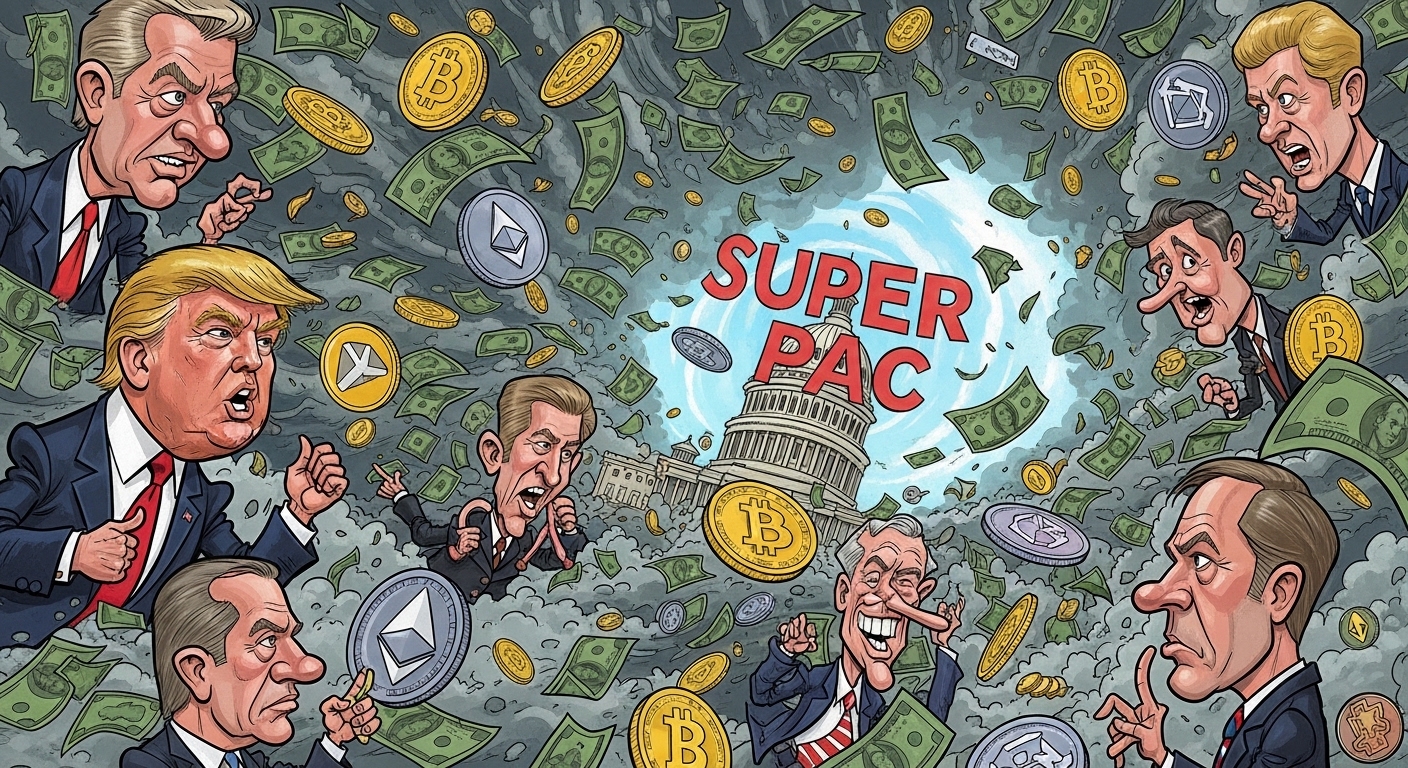
The convergence of artificial intelligence, blockchain-based finance, and high-profile political fundraising has created a new campaign ecosystem—one that is faster, more targeted, and potentially more disruptive than ever before. In recent cycles, political action committees have evolved into sophisticated digital operations. But this time, AI, crypto and Trump super PACs are blending cutting-edge technology with deep war chests, signaling a transformation in how elections are funded and fought. As midterm elections approach, this combination of tech and money is poised to shape messaging, voter outreach, and the broader political landscape in unprecedented ways.
AI, Crypto and Trump Super PACs Reshape Campaign Finance
The phrase AI, crypto and Trump super PACs captures a significant shift in campaign finance dynamics. Traditional fundraising—built on large donor networks, fundraising dinners, and corporate contributions—still plays a role. However, digital tools are redefining how funds are raised, managed, and deployed. Super PACs supporting former President Donald Trump have reportedly amassed millions in preparation for the midterms. These political committees can raise unlimited funds from individuals, corporations, and unions, provided they do not coordinate directly with campaigns. What makes the current cycle different is the integration of cryptocurrency donations and AI-driven campaign strategies. Political cryptocurrency donations allow contributors to bypass some traditional banking channels. Blockchain transactions can move quickly and, depending on the platform, provide varying degrees of transparency or anonymity. This evolution in funding methods highlights how digital assets in politics are gaining traction. At the same time, artificial intelligence tools are helping campaigns analyze donor behavior, predict fundraising trends, and optimize ad placement. The fusion of AI and crypto financing has elevated super PACs into data-powered political machines.
The Role of Artificial Intelligence in Modern Political Campaigns
Artificial intelligence is no longer a futuristic concept in politics. It is a core tool in voter targeting, content creation, and strategic planning.
Data-Driven Voter Targeting
AI systems analyze vast amounts of voter data, including demographics, online behavior, and past voting patterns. Campaign strategists use predictive analytics to identify persuadable voters and tailor messaging accordingly. When paired with the funding strength of AI, crypto and Trump super PACs, this precision targeting becomes even more potent. AI-generated models can simulate how specific messages will resonate with certain groups. This allows campaigns to refine their approach before spending millions on advertising. The result is a more efficient allocation of campaign funds.
Automated Content Creation and Messaging
Artificial intelligence tools can generate email campaigns, social media posts, and ad copy at scale. These systems adapt messaging in real time based on engagement metrics. In the context of AI-driven political campaigns, automation enhances speed and responsiveness. Critics argue that this level of personalization raises ethical concerns, particularly regarding misinformation and deepfake content. Supporters contend that AI simply modernizes outreach in an increasingly digital electorate.
How Cryptocurrency Is Powering Political War Chests
Trump Super PACs and the Midterm Strategy
Super PACs aligned with Donald Trump have historically played a significant role in shaping Republican primaries and general elections. With substantial reserves heading into the midterms, these committees are positioned to influence competitive races nationwide. The strategic deployment of funds is where AI, crypto and Trump super PACs converge. Artificial intelligence tools determine which districts offer the highest return on investment. Cryptocurrency contributions enhance liquidity, ensuring funds are available when strategic opportunities arise. Campaign finance analysts note that early fundraising advantages can translate into media dominance. Television ads, digital campaigns, and grassroots mobilization efforts all require substantial capital. With millions reportedly set aside, these super PACs could shape narratives well before Election Day.
Regulatory and Ethical Questions
The rise of AI, crypto and Trump super PACs also raises pressing regulatory and ethical questions. Election laws were largely crafted before the advent of blockchain technology and advanced AI systems. Regulators must address how cryptocurrency donations are reported and verified. Transparency advocates argue that digital contributions should meet the same disclosure standards as traditional donations. Ensuring compliance without stifling innovation remains a delicate balance. Similarly, AI-generated political content sparks debate about authenticity and accountability. Deepfake technology, algorithmic targeting, and automated messaging blur the lines between persuasion and manipulation. Policymakers face mounting pressure to update election regulations for the digital age.
The Broader Impact on the 2024 Political Landscape
Although the immediate focus is on the midterms, the influence of AI, crypto and Trump super PACs could extend beyond this election cycle. The technological infrastructure built today may serve as a blueprint for future presidential campaigns.
Political strategists across party lines are observing how effectively these tools translate into voter turnout and electoral success. If the model proves successful, AI-driven fundraising and cryptocurrency donations could become standard practice in American politics. The normalization of blockchain political funding and algorithmic campaigning would mark a transformative chapter in campaign finance history.
Media Buying and Digital Advertising Power
Advertising remains one of the largest expenses in political campaigns. The financial reserves amassed by AI, crypto and Trump super PACs enable expansive media buying strategies. Artificial intelligence optimizes ad placement across streaming platforms, social media, and traditional television. Algorithms determine when and where ads will achieve maximum impact. This efficiency ensures that each dollar stretches further. Moreover, crypto-funded reserves allow rapid response advertising. If a political controversy emerges, super PACs can quickly deploy targeted ads to shape public perception. Speed and precision are now as valuable as the size of the war chest.
Public Perception and Voter Reaction
Voter response to AI, crypto and Trump super PACs is mixed. Supporters view the embrace of technology as innovative and forward-thinking. They argue that digital fundraising reflects grassroots enthusiasm and modernization. Critics worry about transparency and the potential for disproportionate influence. The scale of super PAC spending has long been controversial, and the integration of AI and crypto intensifies those concerns. Public trust in election systems depends on perceived fairness and accountability. As technology plays a larger role, maintaining that trust becomes increasingly important.
Economic and Technological Implications
The intersection of politics, artificial intelligence, and cryptocurrency signals broader economic trends. Digital assets are no longer confined to financial markets; they are influencing governance and public policy debates. By leveraging AI, crypto and Trump super PACs, political actors demonstrate how technological innovation can reshape institutional frameworks. This convergence may accelerate discussions about digital regulation, cybersecurity, and campaign transparency. Technology companies and blockchain platforms may also find themselves under increased scrutiny as their tools become central to political strategy.
The Future of AI, Crypto and Trump Super PACs
Looking ahead, the integration of artificial intelligence and cryptocurrency into political fundraising is unlikely to fade. Instead, it may deepen. As AI, crypto and Trump super PACs refine their approach, other political groups may follow suit. Competition could drive even greater technological experimentation, from AI-powered voter simulations to tokenized fundraising initiatives. The midterms may serve as a proving ground. If digital innovation translates into electoral success, the model will likely expand. If backlash emerges, reforms may follow.
Conclusion
The rise of AI, crypto and Trump super PACs marks a pivotal moment in campaign finance. Millions of dollars are being mobilized through cutting-edge technology, reshaping how elections are funded and fought. As midterms approach, the fusion of artificial intelligence, cryptocurrency, and political action committees will influence advertising strategies, voter outreach, and regulatory debates. This evolution reflects a broader shift toward digital-first politics.
See more: Bitcoin Price Analysis: Trump Media $2B Loss & Support Levels
