


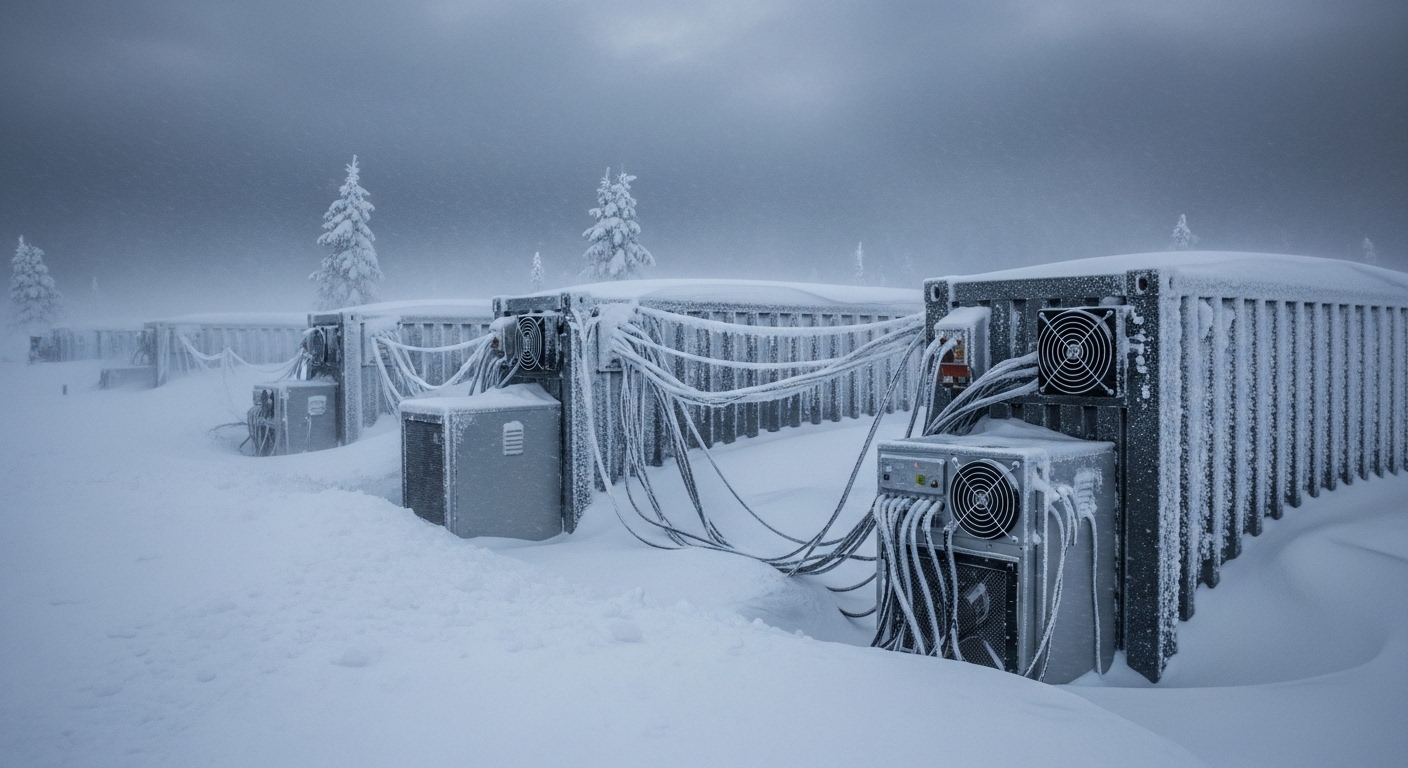
As Arctic air swept through large parts of the United States, electricity grids came under intense pressure. States with significant Bitcoin mining operations, including Texas and New York, reported disruptions linked to freezing temperatures and surging energy demand. The development that Bitcoin mining hit by severe winter storm in US is not just a regional story; it has implications for global crypto markets, investor sentiment, and the ongoing debate about the resilience of digital asset infrastructure.
Why Bitcoin Mining Hit by Severe Winter Storm in US Matters
When Bitcoin mining hit by severe winter storm in US, the immediate consequence was a drop in mining output as operators curtailed power usage to stabilize local grids. Bitcoin mining relies on high-performance computing hardware that consumes vast amounts of electricity. During severe winter conditions, residential heating demand spikes dramatically, forcing grid operators to prioritize households and critical infrastructure over industrial users.
In states like Texas, where a deregulated energy market has attracted numerous mining firms, voluntary shutdown agreements often require miners to power down during grid stress events. This flexibility helps prevent blackouts but temporarily reduces the Bitcoin network’s hash rate.
The phrase Bitcoin mining hit by severe winter storm in US therefore represents more than a weather headline. It highlights the intricate relationship between cryptocurrency infrastructure and traditional energy systems. As mining operations pause, the global Bitcoin network adjusts difficulty levels to maintain stability. However, sudden drops in hash power can create short-term volatility and renewed scrutiny of crypto’s environmental footprint.
Impact on US Crypto Mining Operations
Power Outages and Facility Shutdowns
The reality that Bitcoin mining hit by severe winter storm in US became evident as operators reported temporary closures due to icy conditions and power constraints. Snow accumulation, frozen equipment, and transmission line failures disrupted operations across multiple regions.
Major mining companies such as Riot Platforms and Marathon Digital Holdings have facilities in states susceptible to extreme weather. While these companies design data centers with cooling and redundancy systems, unprecedented winter storms test even the most robust infrastructure. Frozen substations and reduced natural gas supply compounded grid instability. In some areas, energy providers implemented rolling blackouts to prevent total system failure. As a result, US Bitcoin mining disruption became unavoidable.
Hash Rate Decline and Network Adjustments
When Bitcoin mining hit by severe winter storm in US, blockchain data showed a measurable decline in network hash rate. Hash rate represents the computational power securing the Bitcoin network. A drop suggests fewer active mining machines contributing to transaction validation.
Bitcoin’s built-in difficulty adjustment mechanism helps maintain consistent block times. Roughly every two weeks, the network recalibrates mining difficulty based on total hash power. While this system ensures resilience, abrupt changes can influence miner profitability and transaction confirmation times. The event underscores how extreme weather impacts crypto mining, especially in regions with concentrated mining activity.
Texas: The Epicenter of Winter Storm Mining Disruption
Texas Power Grid and Bitcoin Mining
Texas has become a major hub for cryptocurrency mining due to abundant energy resources and favorable regulations. The state’s independent grid operator, Electric Reliability Council of Texas, oversees electricity distribution across most of Texas.
During severe winter storms, ERCOT often calls on large industrial consumers to reduce load. When Bitcoin mining hit by severe winter storm in US, many Texas-based miners responded by curtailing operations. This response helped stabilize the grid but highlighted the delicate balance between industrial growth and infrastructure resilience. The 2021 winter storm crisis in Texas exposed vulnerabilities in power generation and transmission systems. Since then, both regulators and mining companies have implemented measures to improve preparedness. Nevertheless, extreme weather events continue to pose challenges.
Energy Demand Spikes and Grid Stress
Cold temperatures increase electricity consumption as residents rely on electric heating systems. Simultaneously, frozen pipelines can restrict natural gas flow to power plants. These combined factors strain supply and demand equilibrium. When Bitcoin mining hit by severe winter storm in US, miners in Texas acted as flexible load resources, temporarily disconnecting to free up capacity for households. Supporters argue this flexibility proves that mining can enhance grid stability rather than undermine it.
Environmental and Economic Implications
Climate Change and Infrastructure Resilience
Severe winter storms are becoming more unpredictable. Climate scientists point to shifting weather patterns contributing to extreme events. As Bitcoin mining hit by severe winter storm in US, the broader conversation about climate resilience gained momentum.

Crypto mining facilities are energy-intensive by design. Operators increasingly seek renewable energy sources to mitigate environmental concerns. However, renewable generation can also face weather-related disruptions. Snow-covered solar panels and frozen wind turbines reduce output during critical periods. The event reignites debate over whether large-scale mining operations should diversify geographically to reduce concentrated risk.
Economic Impact on Miners
When operations shut down, mining companies lose potential revenue. Bitcoin’s price volatility compounds the challenge. If prices are high during a shutdown, missed mining rewards can significantly impact quarterly earnings. The reality that Bitcoin mining hit by severe winter storm in US may influence investor sentiment. Publicly traded mining firms must reassure shareholders that contingency plans and insurance coverage mitigate financial exposure.
Broader Market Reactions
Cryptocurrency markets often respond to macroeconomic and environmental news. Although Bitcoin’s decentralized structure ensures long-term resilience, short-term disruptions can trigger price swings.
When reports confirmed that Bitcoin mining hit by severe winter storm in US, traders monitored hash rate metrics and mining difficulty forecasts closely. Lower hash rate can temporarily reduce network security perception, though the protocol’s design prevents systemic failure. Additionally, policymakers may revisit discussions about grid integration and industrial load management. The intersection of energy infrastructure and cryptocurrency mining remains a critical area of regulatory focus.
How Miners Are Adapting to Extreme Weather
Mining companies are investing in improved insulation, backup generators, and advanced monitoring systems. Some operators are exploring immersion cooling technology, which submerges hardware in temperature-regulating liquids to enhance efficiency and resilience.
Geographic diversification is another strategy. By distributing facilities across multiple states, companies reduce dependence on a single grid. However, weather events can still disrupt national energy markets. The lesson from Bitcoin mining hit by severe winter storm in US is clear: operational flexibility and grid cooperation are essential.
The Future of US Bitcoin Mining Infrastructure
As cryptocurrency adoption grows, the United States remains a dominant player in global mining. Regulatory clarity, technological innovation, and energy market reforms will shape its trajectory.
Extreme weather events will continue to test infrastructure robustness. The experience that Bitcoin mining hit by severe winter storm in US serves as a case study in balancing industrial growth with environmental realities. Miners, regulators, and energy providers must collaborate to enhance grid resilience. Investments in winterization, renewable integration, and demand-response programs will be crucial.
Conclusion
The headline that Bitcoin mining hit by severe winter storm in US captures a pivotal moment for the crypto industry. As severe weather disrupts operations, the event underscores the interdependence between digital infrastructure and physical energy systems.
While Bitcoin’s decentralized design ensures network continuity, localized disruptions reveal vulnerabilities in concentrated mining regions. Moving forward, resilience planning, renewable diversification, and grid collaboration will shape the industry’s future.
See more: Bitcoin Mining Increases Air Pollution and Threatens Human Health
