


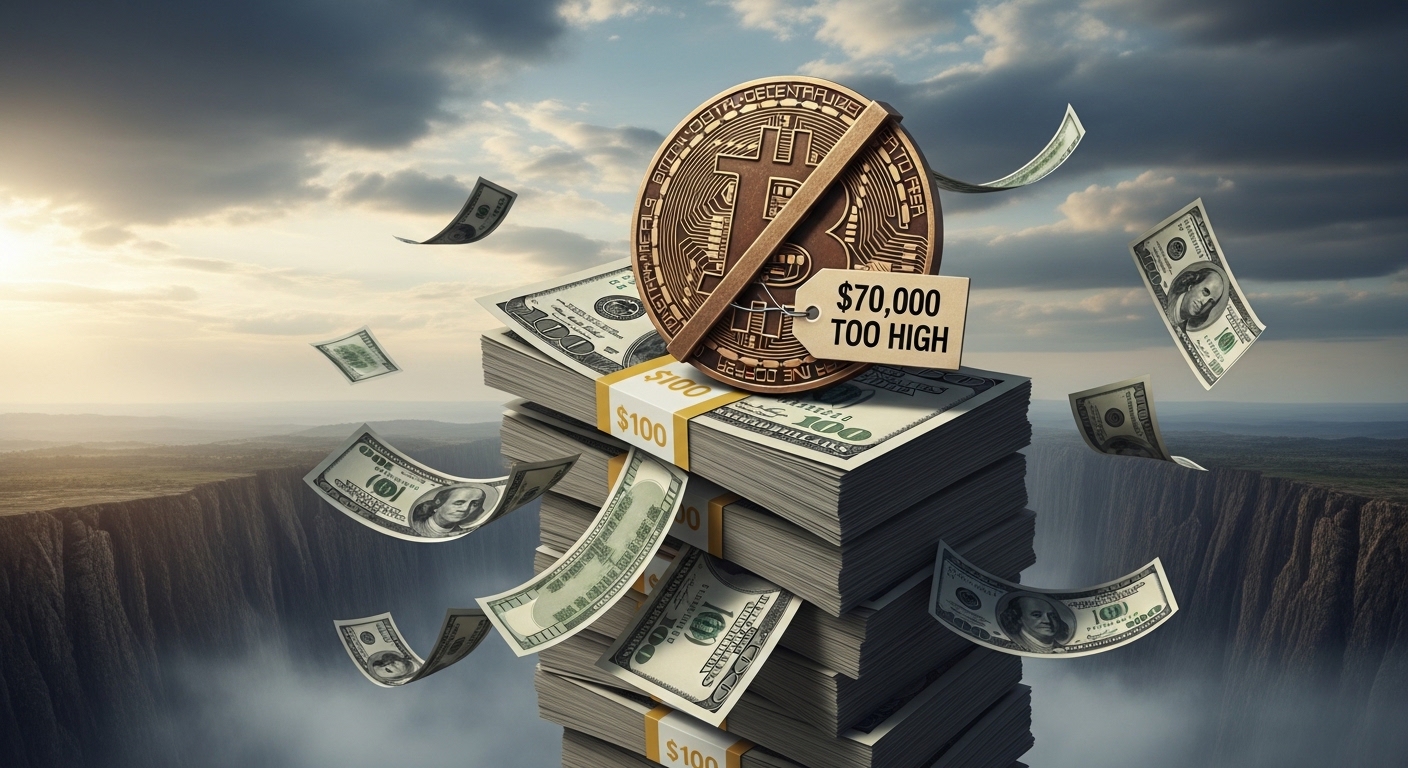
While Bitcoin has captured headlines with its resilience, institutional interest, and mainstream adoption, not everyone is convinced that its current price reflects underlying fundamentals. For skeptics, today’s Bitcoin valuation feels eerily familiar—echoing past cycles where enthusiasm raced far ahead of sustainable value. This debate isn’t just academic. Whether Bitcoin is still about $70,000 too high has real implications for investors deciding whether to buy, hold, or step aside. Bulls argue that traditional valuation methods don’t apply to a scarce digital asset. Bears counter that ignoring valuation altogether is how bubbles form. As the market wrestles with this question, it’s worth examining why some believe Bitcoin remains dramatically overvalued, what models they rely on, and what history suggests could come next.
Bitcoin Is Still About $70,000 Too High According to Valuation Models
When analysts say Bitcoin is still about $70,000 too high, they are usually referencing valuation frameworks designed to estimate fair value rather than short-term price action. These models attempt to anchor Bitcoin’s price to measurable factors such as network usage, transaction volume, mining economics, and long-term adoption trends. One commonly cited approach compares Bitcoin’s market capitalization to its actual economic activity. While Bitcoin’s price has surged, transaction growth has not always kept pace. This divergence fuels the argument that speculative demand, rather than organic usage, is driving valuations. Another method examines Bitcoin’s cost of production. Mining expenses, including energy and hardware costs, provide a rough valuation floor. When Bitcoin trades far above these levels, critics argue the premium reflects hype rather than fundamentals. From this perspective, Bitcoin is still about $70,000 too high relative to its intrinsic support.
Why Traditional Valuation Matters in the Bitcoin Market
Skeptics who insist Bitcoin is still about $70,000 too high often emphasize that no asset can escape valuation indefinitely. While Bitcoin is unique, markets still rely on expectations of future utility, adoption, and cash-flow-like value, even if indirectly. Ignoring valuation entirely can be dangerous. History shows that when prices detach too far from fundamentals, corrections tend to be severe. This doesn’t mean Bitcoin has no future; it means timing and price still matter. Supporters of valuation-based caution argue that Bitcoin’s long-term success does not justify every short-term price surge. Instead, they advocate patience, especially during periods of heightened optimism and aggressive capital inflows.
Bitcoin Price Cycles and the Overvaluation Argument
The claim that Bitcoin is still about $70,000 too high becomes more compelling when viewed through the lens of historical cycles. Bitcoin has a well-documented pattern of rapid appreciation followed by prolonged corrections. Each cycle introduces new narratives, but the underlying behavior remains surprisingly consistent. During past bull markets, Bitcoin often overshot fair value by a wide margin. These peaks were followed by drawdowns of 60% or more. Investors who ignored valuation signals often found themselves holding through years of recovery. This cyclical behavior fuels the belief that current prices may again reflect late-cycle enthusiasm rather than sustainable growth. From this perspective, today’s optimism could be laying the groundwork for tomorrow’s disappointment.
The Role of Institutional Money in Bitcoin’s Valuation
One reason critics say Bitcoin is still about $70,000 too high is the influence of institutional capital. Large inflows from funds and corporations have undeniably supported prices, but they also introduce new risks. Institutions are not emotionally attached to Bitcoin. They allocate capital based on risk-adjusted returns. If market conditions change or alternative assets become more attractive, institutional exits could amplify volatility. While institutional adoption is often cited as a bullish signal, skeptics argue it does not guarantee price stability. In fact, large players exiting simultaneously could accelerate downward moves, reinforcing the argument that Bitcoin’s valuation remains fragile.
Bitcoin Is Still About $70,000 Too High in Real Economic Terms
Another angle supporting the view that Bitcoin is still about $70,000 too high comes from comparing its valuation to real-world economic impact. Despite growing awareness, Bitcoin remains a relatively small part of global commerce. Merchant adoption exists, but it is far from universal. Most Bitcoin activity still revolves around trading and speculation rather than daily transactions. Critics argue that until Bitcoin plays a more significant role in economic exchange, its valuation may be premature. This gap between price and usage fuels skepticism, especially among traditional economists who prioritize measurable economic output over narrative-driven valuation.
Why Bulls Disagree With the “Too High” Narrative
Not everyone agrees that Bitcoin is still about $70,000 too high. Bulls argue that Bitcoin cannot be valued using conventional metrics because it represents a new asset class. Scarcity, decentralization, and censorship resistance are difficult to quantify but highly valuable. Supporters point to Bitcoin’s fixed supply as a key differentiator.

Unlike fiat currencies, Bitcoin cannot be inflated away. This scarcity, they argue, justifies higher valuations even if usage metrics lag. Additionally, Bitcoin’s role as a hedge against monetary instability continues to gain traction. In regions facing currency devaluation, Bitcoin adoption has accelerated, challenging the idea that it lacks real-world utility.
Market Sentiment and Why Overvaluation Claims Gain Traction
The statement Bitcoin is still about $70,000 too high often gains popularity during periods of elevated market sentiment. When optimism peaks, contrarian voices become louder, questioning whether prices have run too far ahead of reality. Sentiment indicators frequently show extreme greed near market tops. At these moments, cautionary narratives resonate more strongly, especially among investors who remember previous crashes. This dynamic doesn’t mean skeptics are always right, but it does highlight the importance of balancing enthusiasm with realism.
On-Chain Data and the Overvaluation Debate
On-chain metrics offer additional insight into whether Bitcoin is still about $70,000 too high. Measures such as realized price, long-term holder cost basis, and dormancy provide context beyond spot price. When Bitcoin trades significantly above its realized price, it suggests that many holders are sitting on unrealized gains. Historically, this condition has preceded periods of profit-taking and consolidation. While on-chain data does not predict exact turning points, it supports the argument that Bitcoin may be priced for perfection, leaving little margin for error.
What Investors Should Consider Right Now
If Bitcoin is still about $70,000 too high, investors face a difficult but familiar decision. Chasing price momentum can be tempting, but doing so late in a cycle carries risk. At the same time, completely dismissing Bitcoin’s long-term potential may mean missing future opportunities. A balanced approach involves understanding valuation concerns while acknowledging Bitcoin’s unique properties. Timing matters, but so does conviction. Investors should assess their risk tolerance, time horizon, and exposure rather than reacting solely to headlines. Patience has historically rewarded those who waited for better entry points, especially after periods of excessive optimism.
Conclusion
The claim that Bitcoin is still about $70,000 too high challenges investors to think critically rather than emotionally. While Bitcoin’s long-term narrative remains compelling, valuation concerns deserve attention, particularly in a market known for dramatic swings. History suggests that periods of overvaluation are often followed by corrections that reset expectations and create healthier foundations for growth. Whether Bitcoin adjusts through time, price, or both remains uncertain.
