


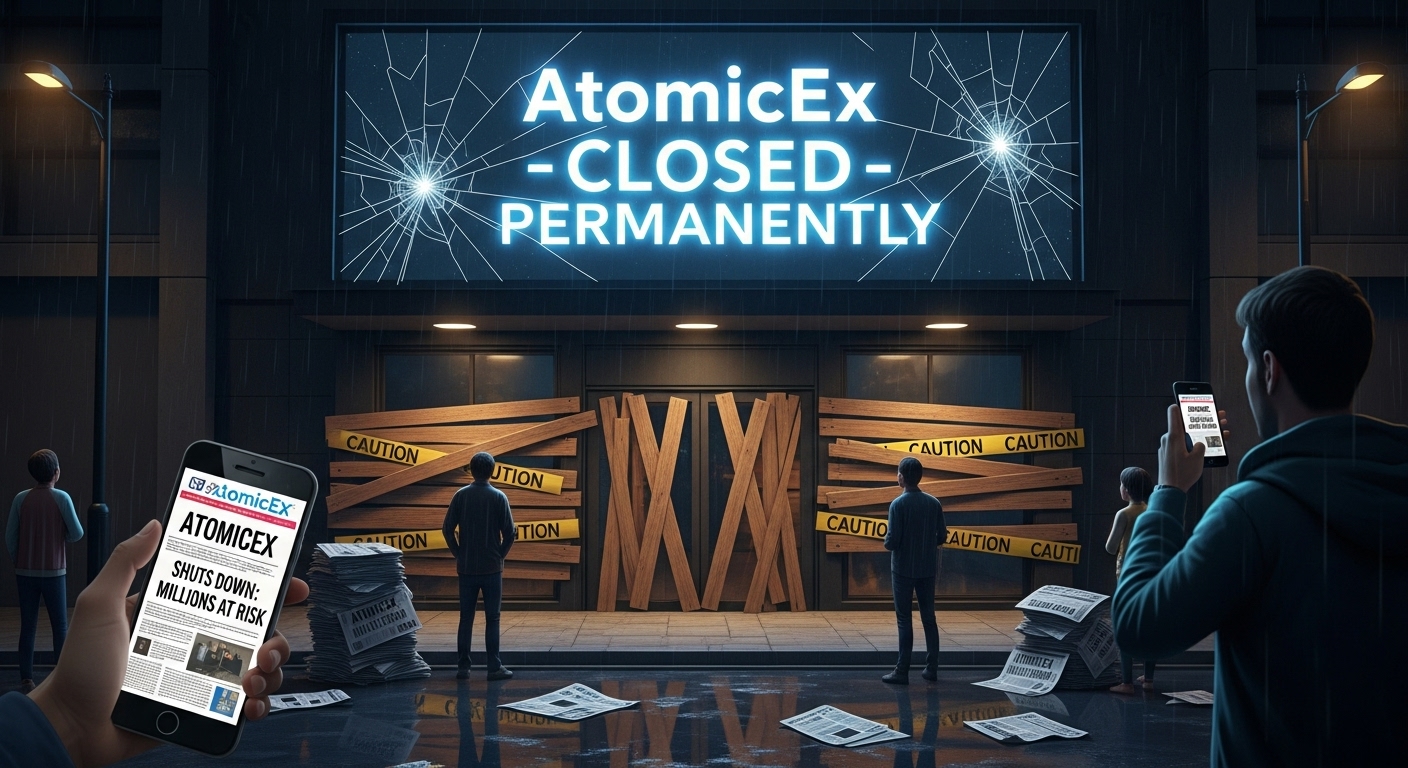
For years, the platform had served as a cornerstone of the crypto economy, facilitating billions of dollars in transactions and building a reputation that many users believed was unshakeable. Now, that trust has been shattered. As trading halted and withdrawal functions became inaccessible, users around the world began voicing fears that millions—if not billions—of dollars in crypto assets could be permanently lost.
The moment an iconic crypto marketplace shuts down, it exposes the fragile foundations of centralized crypto platforms. Investors, traders, and everyday users are once again confronting a painful reality: in crypto, trust can disappear overnight. This shutdown is more than a single company’s failure; it is a stark reminder of systemic risks that continue to haunt the digital asset ecosystem.
Iconic Crypto Marketplace Shuts Down Amid Growing Uncertainty
The announcement that an iconic crypto marketplace shuts down did not come with much warning. Users first noticed irregularities when deposits slowed, customer support went silent, and withdrawals began to stall. Shortly after, an official statement confirmed what many feared: the platform was suspending operations indefinitely.
This sudden collapse has raised urgent questions about liquidity, asset custody, and operational transparency. The marketplace had positioned itself as a trusted intermediary, yet its closure highlights how quickly confidence can erode in the crypto space. When an iconic crypto marketplace shuts down, the consequences extend far beyond the platform itself, impacting market sentiment across the entire industry.
Traders who relied on the marketplace for daily liquidity found themselves locked out, while long-term investors scrambled to understand whether their assets were still accessible. The lack of clarity has only intensified anxiety.
Why the Iconic Crypto Marketplace Shut Down
Liquidity Pressures and Financial Strain
One of the leading theories behind why an iconic crypto marketplace shuts down centers on liquidity issues. In periods of heightened market volatility, platforms face intense pressure as users rush to withdraw funds simultaneously. If reserves are insufficient or poorly managed, the system can collapse rapidly.
Blockchain analysts have noted unusual on-chain activity in the days leading up to the shutdown, suggesting potential liquidity shortfalls. When withdrawals exceed available assets, even well-known platforms can become insolvent almost overnight. This scenario reinforces long-standing concerns about centralized exchanges, proof of reserves, and custodial risk in crypto markets.
Regulatory and Legal Challenges
Another factor contributing to the moment an iconic crypto marketplace shuts down may involve regulatory scrutiny. Governments worldwide are increasing oversight of crypto platforms, focusing on compliance, consumer protection, and anti-money laundering standards.
If regulators freeze assets or initiate investigations, platforms can be forced to suspend operations with little notice. For users, this creates a worst-case scenario where funds become entangled in lengthy legal processes. The shutdown underscores the growing tension between crypto innovation and regulatory enforcement.
User Panic as an Iconic Crypto Marketplace Shuts Down
Fear spreads quickly in crypto, and the reaction was immediate once it became clear an iconic crypto marketplace shuts down. Social media platforms flooded with posts from users reporting frozen accounts, missing balances, and unanswered support tickets.
Many users had stored significant portions of their portfolios on the platform, trusting its long-standing reputation. The emotional toll is immense, as some now fear losing life savings. This moment highlights a painful truth of the crypto industry: platform credibility does not guarantee asset safety. When an iconic crypto marketplace shuts down, panic often spills into the broader market. Prices of related tokens can plunge, liquidity dries up, and confidence across other platforms is shaken.
The Impact on the Broader Crypto Market
The shutdown of a major platform rarely happens in isolation. When an iconic crypto marketplace shuts down, it sends shockwaves through interconnected markets. Liquidity providers pull back, traders reduce exposure, and risk appetite evaporates almost instantly.
Bitcoin and major altcoins often experience short-term volatility as investors reassess counterparty risk. Smaller projects tied to the marketplace may face existential threats if they relied heavily on its infrastructure. The event reinforces fears of contagion, where one failure triggers a chain reaction across the crypto ecosystem. This is not the first time an iconic crypto marketplace shuts down, and history shows that each incident leaves lasting scars on investor confidence.
Lessons From Past Crypto Marketplace Collapses
Repeated Patterns of Failure
When analyzing previous cases where an iconic crypto marketplace shuts down, similar patterns emerge. Rapid expansion, weak risk controls, opaque accounting, and overreliance on user deposits often precede collapse. Despite repeated warnings, many platforms continue to operate with minimal transparency.
The crypto industry has promised self-regulation for years, yet each high-profile shutdown exposes the same vulnerabilities. Users are once again reminded of the importance of self-custody, cold wallets, and diversified risk management.
Trust Versus Verification
A critical lesson from every time an iconic crypto marketplace shuts down is the danger of blind trust. Crypto was built on the principle of “don’t trust, verify,” yet centralized platforms reintroduce trust as a requirement. Without transparent audits and on-chain verification, users remain exposed.
What Happens to User Funds After the Shutdown?
One of the most pressing questions after an iconic crypto marketplace shuts down is whether users will recover their funds. The answer depends on multiple factors, including asset custody structure, jurisdiction, and the platform’s financial health.
If user assets were commingled with company funds, recovery becomes far more complicated. In bankruptcy proceedings, users may be treated as unsecured creditors, placing them at the back of the line. This legal reality often shocks users who assumed their funds were segregated and protected. The lack of immediate communication following the shutdown has only deepened uncertainty. Each passing day without updates fuels speculation and fear.
Regulatory Fallout After an Iconic Crypto Marketplace Shuts Down
Regulators rarely ignore events where an iconic crypto marketplace shuts down. Investigations often follow, focusing on compliance failures, mismanagement, or fraud. These inquiries can drag on for years, leaving users in limbo.
At the same time, lawmakers may use the incident to justify stricter regulations. While increased oversight could improve consumer protection, it may also stifle innovation if poorly implemented. The shutdown thus becomes a catalyst for broader policy debates about the future of crypto markets.
How Users Can Protect Themselves Going Forward
The moment an iconic crypto marketplace shuts down serves as a harsh reminder that risk management is essential in crypto. Storing large balances on centralized platforms exposes users to counterparty risk they cannot control.
Self-custody solutions, such as hardware wallets, reduce reliance on third parties. Diversifying across platforms and regularly withdrawing funds can also limit exposure. While these steps may seem inconvenient, they can mean the difference between temporary disruption and permanent loss. Crypto’s promise of financial sovereignty only holds true when users actively take control of their assets.
Market Sentiment After an Iconic Crypto Marketplace Shuts Down
Investor sentiment often deteriorates sharply after news breaks that an iconic crypto marketplace shuts down. Fear, uncertainty, and doubt spread quickly, leading to reduced trading activity and lower volumes across exchanges.
However, history also shows that markets eventually stabilize. While trust is damaged, it is not permanently destroyed. Each crisis forces the industry to evolve, adopt better standards, and strengthen infrastructure. The long-term outcome depends on whether meaningful reforms follow.
The Long-Term Implications for Crypto Platforms
If anything positive emerges when an iconic crypto marketplace shuts down, it is renewed scrutiny of centralized platforms. Users demand greater transparency, regulators push for accountability, and competitors are forced to improve practices.
Decentralized finance continues to gain attention as an alternative, offering non-custodial solutions that reduce counterparty risk. While DeFi introduces its own challenges, the collapse of centralized marketplaces strengthens the argument for trust-minimized systems. The crypto industry’s credibility depends on learning from these failures rather than repeating them.
Conclusion
The news that an iconic crypto marketplace shuts down is more than just another headline—it is a wake-up call for the entire digital asset community. Millions of users now face uncertainty, questioning whether their funds are safe and whether trust in centralized platforms was misplaced.
As crypto continues to mature, incidents like this highlight the urgent need for transparency, accountability, and user education. If you want to navigate the market safely, understanding what happens when an iconic crypto marketplace shuts down is essential. Stay informed, take control of your assets, and rethink where you place your trust in the evolving world of crypto.
See more: Casino Industry Guide – Games Resorts Online Play
