


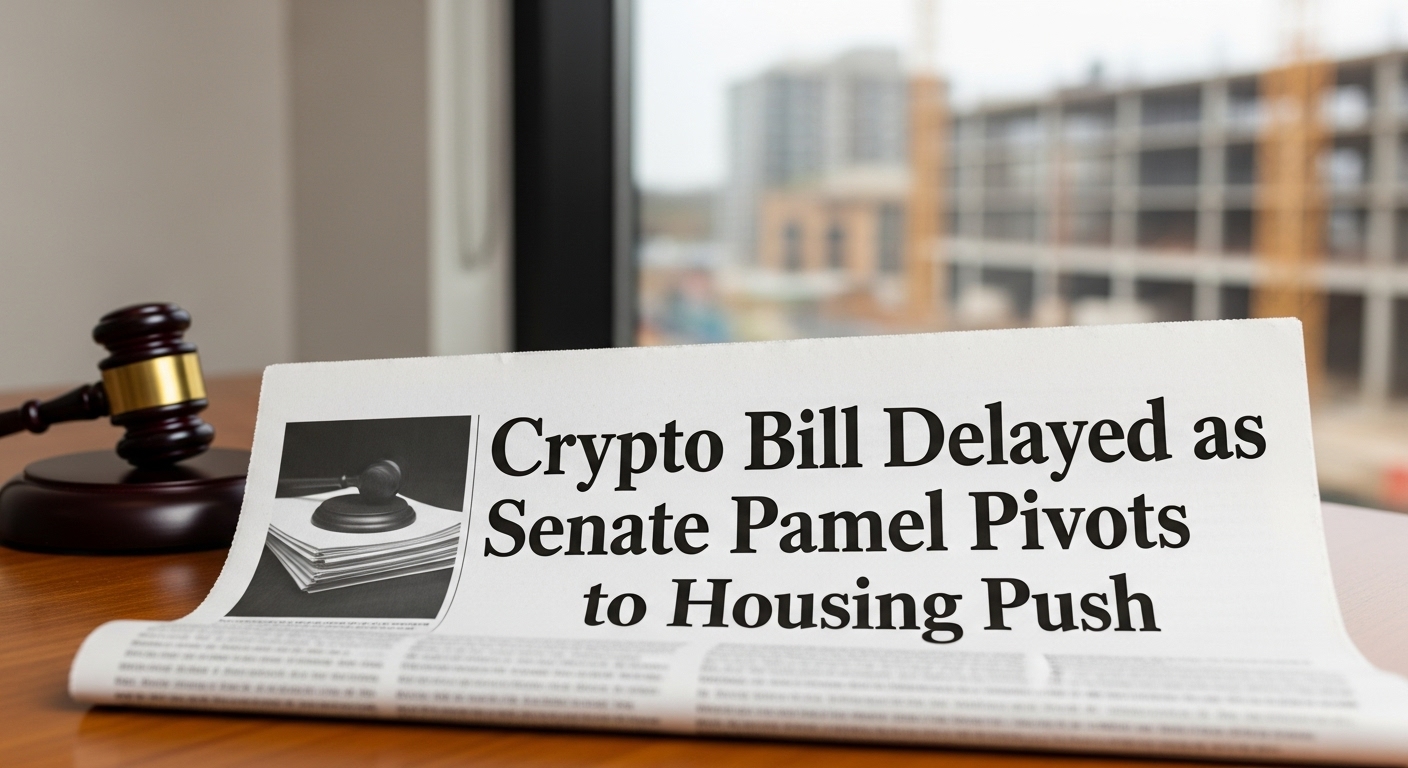
As lawmakers shift attention away from cryptocurrency oversight toward urgent housing legislation, the delay has introduced new uncertainty for investors, blockchain companies, and policymakers alike. This development reflects a broader struggle in Washington to balance financial innovation with pressing economic and social concerns, leaving the crypto industry waiting for long-anticipated regulatory clarity.
The delay does not mean crypto regulation is off the table, but it does highlight how legislative momentum can quickly change. For an industry seeking stability, the Senate panel’s pivot raises critical questions about timing, enforcement, and the future direction of digital asset laws in the United States.
Why the Crypto Bill Was Delayed
The Crypto Bill Delayed as Senate Panel Pivots to Housing Push stems from a strategic shift rather than outright opposition to crypto regulation. Senate committees often juggle multiple priorities, and housing affordability has risen to the top of the agenda amid economic pressure, rising rents, and voter concerns. As a result, the crypto bill, which aimed to address regulatory gaps in digital assets, was temporarily sidelined.

This pause underscores a recurring challenge for the crypto industry: regulatory initiatives must compete with issues that have more immediate political urgency. While blockchain innovation continues to advance rapidly, legislative processes move at a slower pace, especially when lawmakers are under pressure to deliver solutions to housing shortages and affordability crises.
The Role of the Senate Panel in Crypto Regulation
The Senate panel responsible for the legislation plays a pivotal role in shaping the regulatory environment for cryptocurrencies. When the Crypto Bill Delayed as Senate Panel Pivots to Housing Push, it demonstrated how committee leadership can influence which policies move forward and which are deferred. This panel has previously examined issues such as consumer protection, stablecoin oversight, and the role of federal agencies like the SEC and CFTC.
Crypto Bill Delayed as Senate Panel Pivots to Housing Push: What’s at Stake
Regulatory Uncertainty for the Crypto Market
The Crypto Bill Delayed as Senate Panel Pivots to Housing Push has amplified regulatory uncertainty across the digital asset ecosystem. Crypto exchanges, blockchain startups, and institutional investors rely on clear rules to operate confidently. Without a finalized framework, companies face ambiguity over compliance requirements, taxation, and reporting obligations.
This uncertainty can slow innovation and discourage investment, particularly as other jurisdictions move ahead with clearer crypto regulations. The U.S. risks falling behind in the global race to define standards for blockchain technology if legislative delays continue.
Impact on Investors and Market Confidence
For investors, the Crypto Bill Delayed as Senate Panel Pivots to Housing Push introduces another layer of unpredictability. Market participants often react to regulatory signals, and delays can create volatility or hesitation. While some investors may view the pause as a temporary setback, others worry about prolonged inaction and the potential for fragmented enforcement by multiple agencies. The absence of comprehensive legislation leaves room for regulatory overlap, which can confuse investors and undermine confidence in the long-term stability of the crypto market.
Housing Push Takes Center Stage in the Senate
The Senate panel’s decision to prioritize housing reflects a broader political reality. Housing affordability has become a central issue affecting millions of Americans, prompting lawmakers to act swiftly. The Crypto Bill Delayed as Senate Panel Pivots to Housing Push illustrates how economic pressures can redirect legislative focus, even when other sectors are pushing for attention.
Housing legislation often carries immediate social and political benefits, making it a compelling priority. However, the shift also highlights the challenge of addressing long-term technological innovation while responding to urgent domestic needs.
Why Housing Legislation Is Politically Urgent
Housing issues resonate strongly with voters, especially amid rising costs and limited supply. By pivoting to housing, the Senate panel is addressing a tangible concern with direct impact on constituents’ lives. This urgency explains why the Crypto Bill Delayed as Senate Panel Pivots to Housing Push, even though crypto regulation remains important for economic competitiveness. The political calculus favors issues with immediate visibility, which can push emerging technologies like crypto further down the legislative agenda.
Broader Implications for U.S. Crypto Policy
The Risk of Falling Behind Globally
The Crypto Bill Delayed as Senate Panel Pivots to Housing Push raises concerns about the United States’ position in the global crypto landscape. Countries such as the European Union and Singapore have advanced comprehensive frameworks that provide clarity and attract innovation. Prolonged delays in the U.S. could prompt companies to relocate or focus on markets with more predictable regulations. This potential shift could have long-term consequences for American leadership in financial technology and blockchain development.
Fragmented Regulation Without Congressional Action
Without a clear legislative framework, regulatory agencies may continue to interpret existing laws independently. The Crypto Bill Delayed as Senate Panel Pivots to Housing Push means agencies like the SEC and CFTC could pursue enforcement actions without unified guidance, leading to inconsistent outcomes. Such fragmentation can burden businesses with overlapping requirements and legal uncertainty, further emphasizing the need for comprehensive legislation.
Industry Response to the Crypto Bill Delay
Reaction from Crypto Companies and Advocates
The crypto industry has responded to the Crypto Bill Delayed as Senate Panel Pivots to Housing Push with a mix of frustration and cautious optimism. Many advocates acknowledge the importance of housing reform but stress that delaying crypto legislation prolongs uncertainty. Industry leaders continue to call for clear, balanced regulations that protect consumers while fostering innovation. Some companies may use this period to strengthen compliance efforts and engage with policymakers, hoping to shape future legislation when it returns to the agenda.
Investor Sentiment Amid Legislative Shifts
Investor sentiment often mirrors regulatory developments. The Crypto Bill Delayed as Senate Panel Pivots to Housing Push may prompt short-term caution, but long-term investors may view it as a reminder that crypto regulation is evolving rather than disappearing. Market participants are closely watching signals from lawmakers to gauge when crypto policy might regain momentum.
Long-Term Outlook for Crypto Legislation
Will the Crypto Bill Return Soon?
The Crypto Bill Delayed as Senate Panel Pivots to Housing Push does not necessarily signal abandonment. Legislative priorities shift frequently, and crypto regulation is likely to return once housing measures progress. However, the timeline remains uncertain, and delays could extend into future sessions. The return of the bill will depend on political will, public pressure, and the perceived urgency of addressing crypto-related risks and opportunities.
Potential Changes When the Bill Reemerges
When the crypto bill reappears, it may incorporate new perspectives shaped by ongoing market developments. The Crypto Bill Delayed as Senate Panel Pivots to Housing Push gives lawmakers time to reassess industry feedback, enforcement trends, and international standards. This could lead to more refined legislation that balances innovation with oversight.
Conclusion
The Crypto Bill Delayed as Senate Panel Pivots to Housing Push highlights the complex interplay between political priorities and technological innovation. While housing reform demands immediate attention, the delay leaves the crypto industry navigating uncertainty at a critical time. Clear regulation remains essential for protecting investors, encouraging innovation, and maintaining U.S. competitiveness in the global digital economy.
As lawmakers address housing challenges, the crypto community must stay engaged, informed, and proactive. If you want to stay ahead of policy shifts and understand how the Crypto Bill Delayed as Senate Panel Pivots to Housing Push could impact the future of digital assets, follow the latest developments and join the conversation shaping tomorrow’s crypto regulations.
See more : China’s Digital Yuan Bribery Scheme $8M Crypto Scandal
